

I’ve revived my practice of using this space to share interviews with creative, soulful folk that I meet in my little corner of Austin, TX. After all, creative and spiritual practice is meant to be communal and the world is rich with wise and and inspiring practitioners.
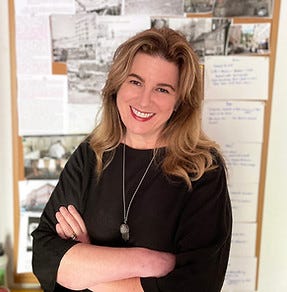
Canan Yetmen is one of these. She presents as an easy-going intellectual type, with a ready smile and perceptive wit. But scratch the surface and you’ll soon discover Canan’s tenacious creative Will. It’s driven her not only to create masterful stories, but to midwife them through the editing, production, and distribution process herself, foregoing the slowdowns and creative compromises sometimes demanded by the traditional publishing industry. The result is Canan’s self-published, IPPY Award-winning Anna Klein Trilogy; the sequel and fourth installment of which, The Pretense of Memory, is set to release in June!
Meeting together to talk about her process, Canan and I drew the Four of Wands to guide this next step in the project’s journey—a fitting invitation to celebrate the timely, resonant, life-affirming historical fiction novels she has created.
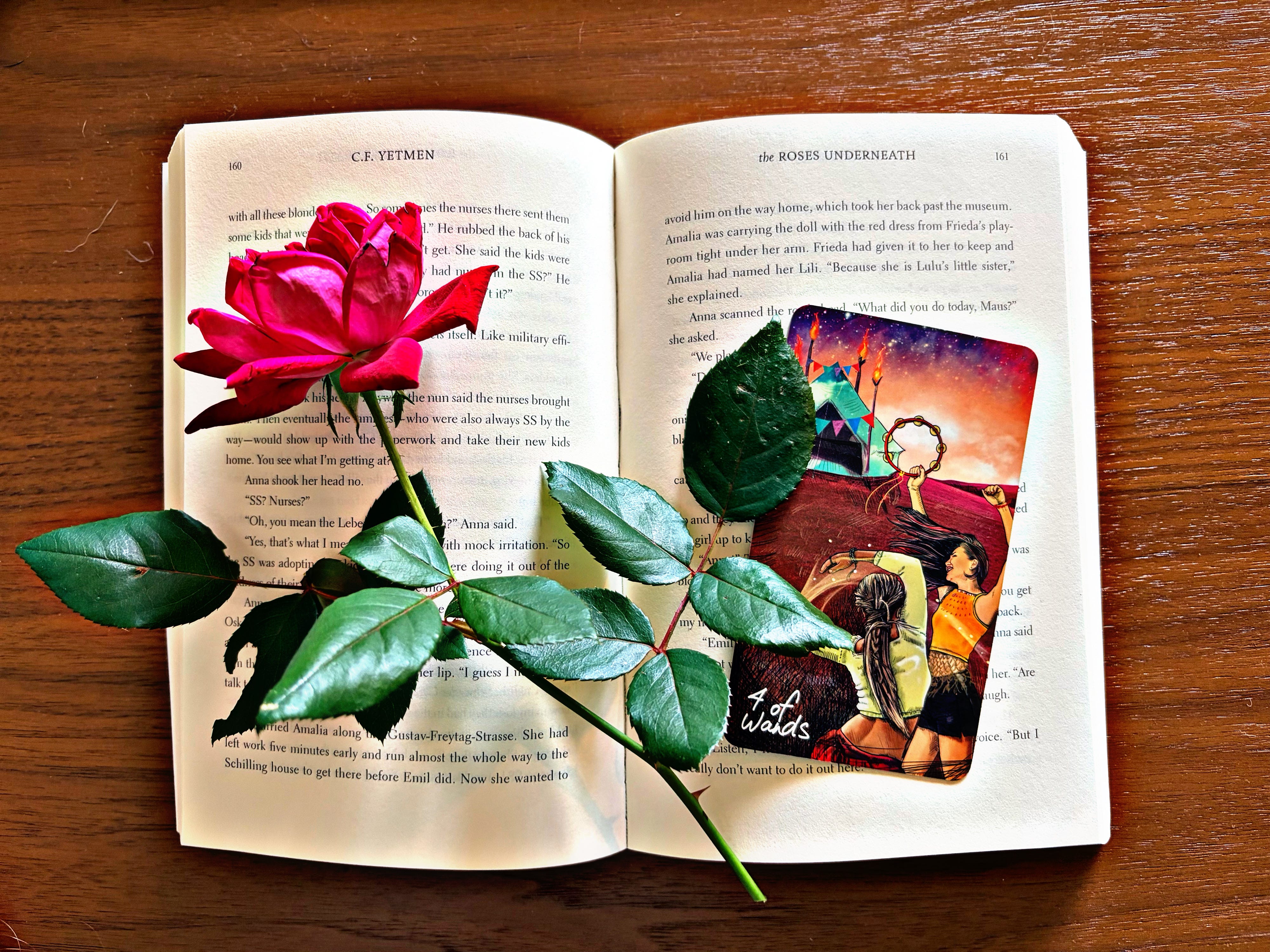
Character-driven and meticulously researched, the Anna Klein series follows the story of a young woman living through the aftermath or World War II balancing her roles as mother and Monuments’ Men operative. (Not familiar with the Monuments Men? Get ready to become obsessed: they were a select group of Allied architects and art historians who worked within the armed forces to preserve and recover cultural artifacts and artwork stolen or confiscated by the National Socialists during the war—more on them later.)
My conversation with Canan inspired me to think deeply about the role of creative practice in ancestral healing and gave me a renewed appreciation for the Badassery of supporting Art of all kinds—including your own!—even in the midst of utter chaos and humanitarian decline. If you want to be inspired to do your own creative/spiritual/soul-driven work in the face of TOWER-level chaos, read on with me now!
Moving the Myth to the Mundane.
Canan explained to me that she didn’t grow up dreaming of becoming a writer. She never thought of writers as real people. “There were no writers at the grocery store standing in line next to you.” They were “untouchable,” out there, like Steinbeck, she said—as mythic as the characters that populated their works.

It wasn’t until young adulthood when Canan’s mother-in-law took her to one of Sue Grafton’s promotional events that Canan thought, “Wait, she’s like a normal person. She’s figured this out.” It looked, Canan said, like fun. And immediately she had that lightning-strike feeling of—I want to do that.
Canan let the notion percolate for the next decade-plus while she built a career in the field of architecture and design. She learned what it took to bring something to print by working for Texas Architect magazine and honed her writing skills as communications expert for the Texas Society of Architects. Meanwhile, she was happy to be able to work with writing everyday. It felt like a privilege and the best case scenario for someone drawn to language and aesthetics.
Then her daughter was born and something shifted.
“I had the urge to just claim something for myself, where I could shut the door and have it just be mine.”
Ironic, seeing as early motherhood is maybe the hardest time to pick up a new creative practice. The demands on mothers’ attention and time are so great at that moment: their lives have been upended, time is unreliable and energy even less so. Yet, Canan’s eyes twinkle as she recalls that season of her life when she committed to a daily practice of getting up at 4 am to write in those sweet, solitary hours before the house would come awake.
“It was so sort of precious, because nobody knew what I was doing. Nobody really cared. I didn’t know what was going to happen. It never really occurred to me that anybody would read these stories…or that it was good or that it was of interest to anybody… I just loved figuring out the puzzle.”

I find myself reflecting on the creative urgency that spearheaded my own writing in the early years of my children’s lives. I’ve heard relatives remark about on the creative-rush of new parenthood and seen it play out in friends and among the writers and musicians I know. Whether mothers fuel the creative impulse into new parenting tasks, making baby food or making hand-made toys (I did both of these when my kids were small), or we use it to turn up the heat on long-simmering artistic projects, matrescence seems to encourage us to remake the world, for ourselves, for our children, or for some greater evolutionary aim that lies outside of our awareness.
Out of chaos, we create.
For Canan, the creative drive-increase of early motherhood involved revisiting lingering questions about her own identity as the descendent of World War II survivors.
“My mother was born in Germany in 1940 during the war. And my grandmother, at the end of the war, left my grandfather behind, took her mother, and my mother—so three generations—and fled west when the Russians were coming…She was a displaced person.”
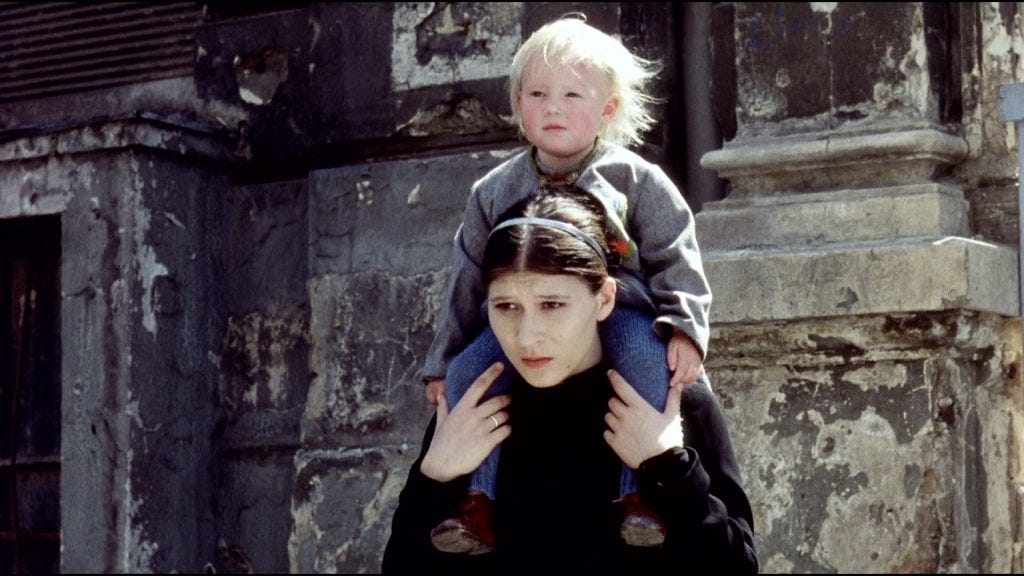
“She landed in Darmstadt, which is just outside of Frankfurt…She got a job working for the American occupation, because she knew how to speak English. She was literally plucked off the street. Someone was like, ‘does anybody speak English?’ And she was like, I do….that saved them.”
These broad strokes of family lore became the basic backstory of Anna Klein, the protagonist of Canan’s trilogy about a young mother unraveling the mysterious whereabouts of artwork confiscated by the National Socialists.
“I happened to just come across a documentary on PBS one night [on the Monuments Men] and so many of them were architects. And I work with architects in my day job…And then one day I was on a walk on Town Lake and those two ideas [family history and art history] just collided.”
Uncovering the history of the Monuments Men while collecting and revisiting the details of her familial history, amounted to a body of work that feels both historically significant and deeply personal. Canan’s writing unearths so much of what was tenuous and unstable in the postwar period—accounting for both the fragility of the moment and the resilience it demanded.
“I walked around my whole life with this understanding that if World War Two had not happened the way it did, that if the Nazis had not come to power in Germany, I would not exist...I feel this very visceral connection to that time and place. It’s like, there’s some connection to something else that I can’t explain.”

With distance I might label Canan’s experience as a type of inherited trauma—like how our DNA can hold onto the memory of war-induced scarcity, while our minds build out stories to try and catch up—but what I say in the moment is that the Inexplicable, “sounds like a spiritual connection.”
“Yes,” Canan says. “Which I’m terrible at articulating. But yeah, there’s definitely an ancestral connection and definitely something else at work. I will say that.”
For me, the JUDGEMENT card sort of floats into the darkened space where the words don’t reach here. I often read JUDGEMENT as an invitation to ancestral healing—or at least the possibility of growing in awareness of one’s psychosocial familial inheritance.
So much of the writing process is this kind of excavation (digging up the bodies, or “writing down the bones” as Natalie Goldman says) that it occurs to me how omnipresent JUDGEMENT energy is for all of us when we put our stories to paper. Like the poet, Seamus Heaney resting his squat pen between finger and thumb, when we write, we write alongside all of our ancestors.
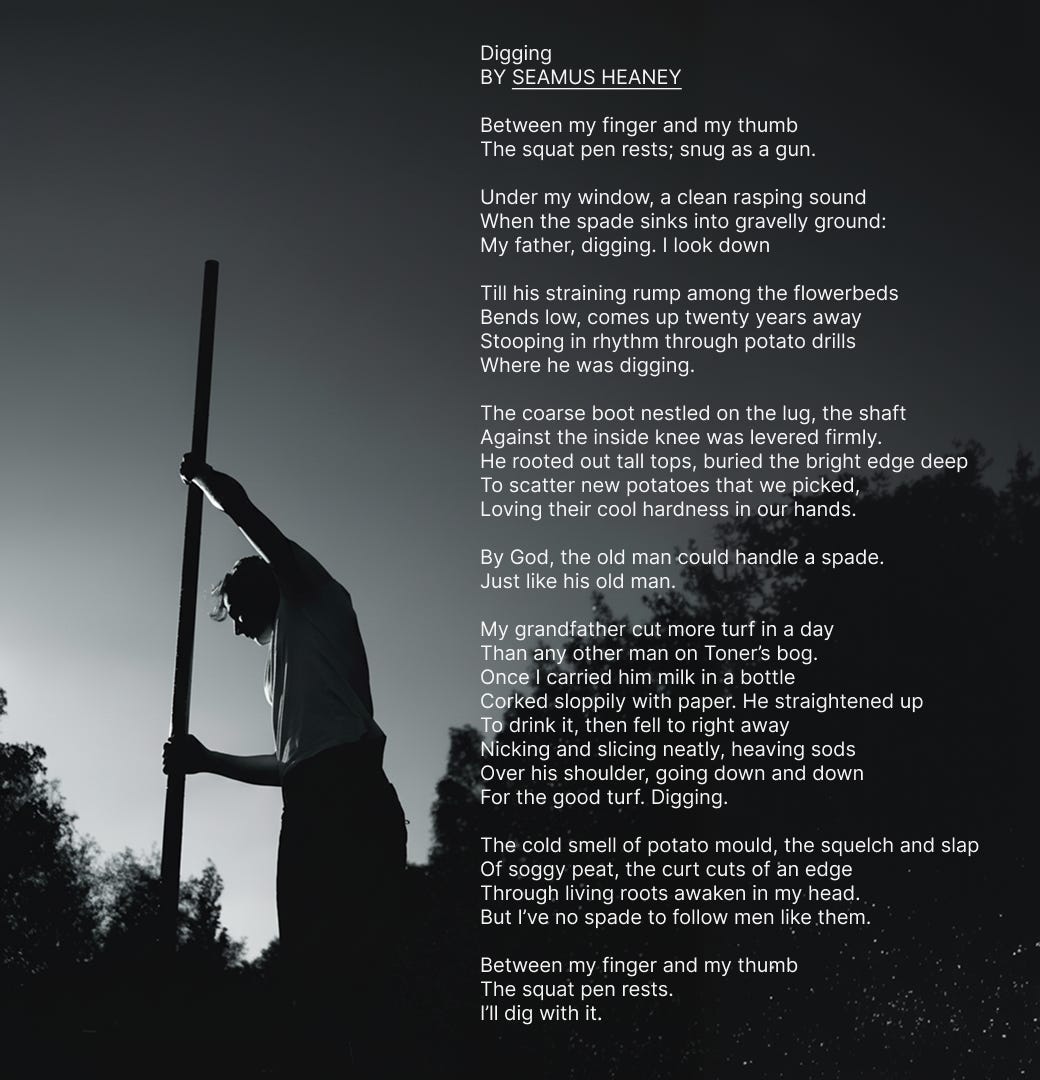
My personal worldview holds space for the possibility that creative practice opens a place where we can commune with our beloved dead directly. In the act of creativity we make peace with parts of our psyche that we’ve inherited or revive what has lain dormant. We start to communicate with what lives inside of us and, in turn, we connect with the seen and unseen world more explicitly than we could before.
For Canan, this intergenerational creative channel had a real-life equivalency. Like many women who lived through the post-war period, Canan’s grandmother was reticent about her life as a refugee. When the Berlin Wall came down in 1989, Canan was able to travel to East Germany with her grandmother for a short time, identifying the places where their lives had, serendipitously it seemed, unfolded. A tension grew between her grandmother’s silence and Canan’s recognition, standing at those sites, that the past revolved around real events and real people—rather than abstract historical concepts.
The person to help relieve that tension was Canan’s mother.
“My mother was very excited when I started this project. She was sending me articles constantly. We were discussing it. I was giving her pages. My mother is a huge reader. And she was also a very honest critic. And so I trusted her…She would tell me about her childhood…little details would come from the things she remembered….we would watch movies together…and would just talk about it all the time.”
Sometime after Canan published the first book in her series, her mother developed dementia. By the time that the second book was published, the condition had progressed so that her mother was unable to read it in its entirety. “I lost her during that process,” Canan says. “That was really difficult.” And yet, the fictional world that Canan’s mother had helped her to build continued to grow and evolve in Canan’s imagination.
TOWER in the Collective.
“When I wrote the first book [it] was 2008. So Obama had just been elected and I was like, oh yeah, I’m gonna write this book about the aftermath of World War Two, from the standpoint of like, oh, we’re never doing that again. Like, look at us, we learned our lesson…To be sitting here now…things [have] changed.”
We talk a bit about the flattening of cultural diversity under the National Socialist regime—how particularly insidious this process was for women and marginalized groups and how it played out in the degradation and mobilization of art under Hitler.
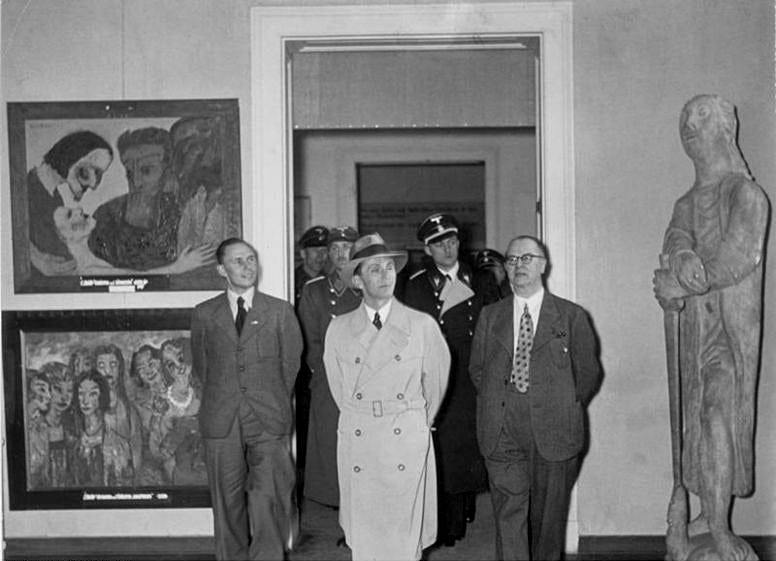

And yet, Canan’s story offers hope in the figure of Anna Klein, who, like so many women, so many mothers, survived through impossible situations. Their creative impulses cut a path through the most unimaginable of circumstances.
Canan says that she thought a lot about those mothers in the early days of her parenting—this was while drafting The Roses Underneath the first book in her series—when struggles like getting her daughter to put on her shoes seemed like monumental tasks.
“I remember one day thinking, like, how do people do this? Like in any other situation than this ridiculously privileged one that I’m in where it’s like: ok so she doesn’t put on her shoes. You’re five minutes late. Who cares? It hit me that, okay—there are women on the planet right now who are dealing with this exact scenario, under insanely different circumstances.”
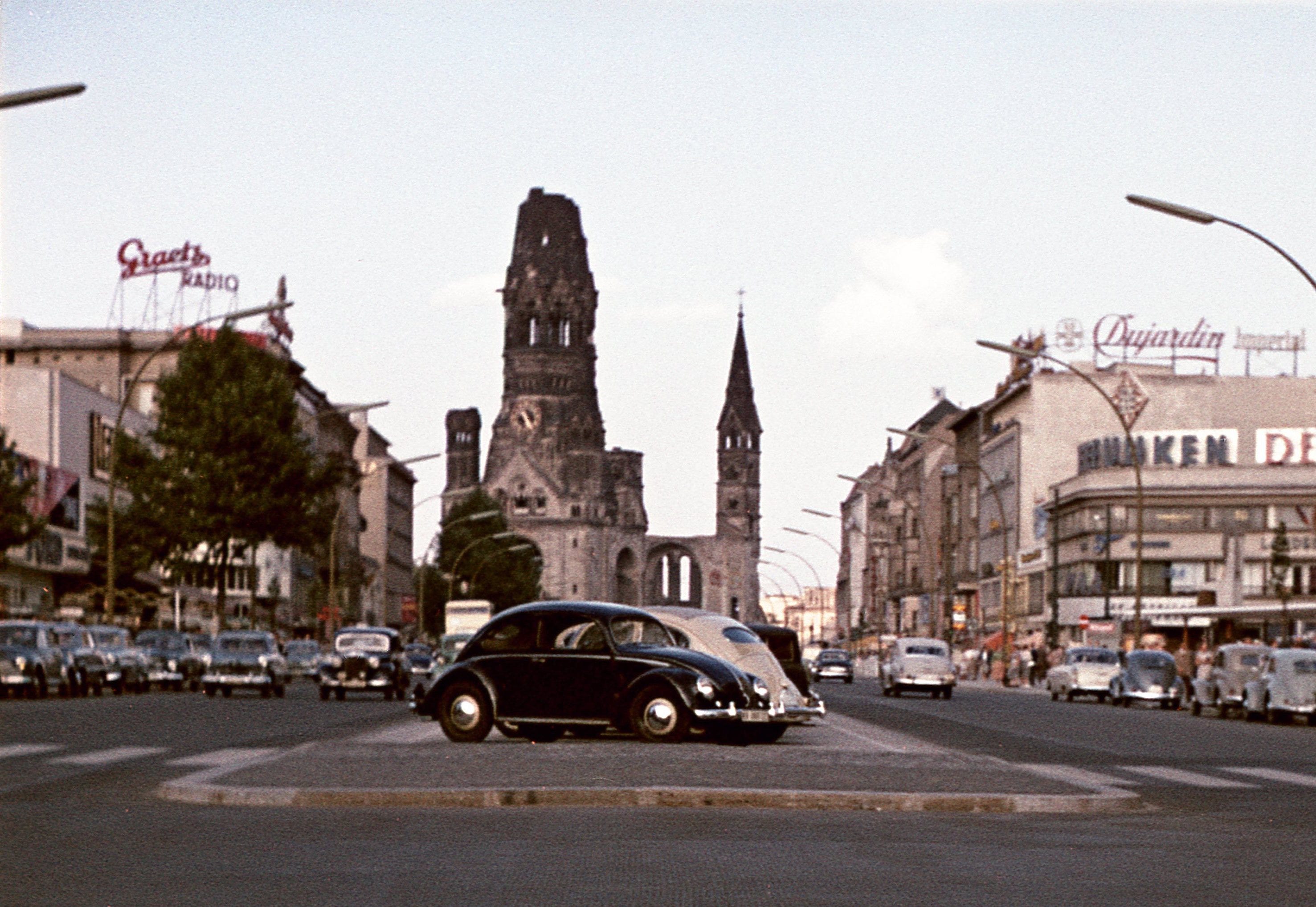
Imagining Anna Klein’s determination gave Canan an opportunity to explore what it must have been like for her grandmother, what it is still like for many mothers, to parent through what I would call extreme TOWER moments, involving political persecution, food insecurity, and the persistent threat of bodily and psychological harm. Anna not only ensures her own and her daughter’s survival, but works through the wreckage to (symbolically at least) restore the diversity that the Nazis had tried to snuff out—through the rescue of the country’s stolen art from hidden enclaves.
The Magic of Persistence.
I ask Canan where she finds the motivation to persist with her project now, almost two decades and four books later, in a vastly different personal and political moment. In addition to watching movies, visiting museums, and being open to inspiration in the every day, she says:
“I love the research because you get these little nuggets of things…Like some big political policy or some law and how it effects someone’s every day life, in a way that they don’t even connect it like that. Like they’re just sitting in a cafe. Or they’re sitting in a TSA line at an airport wondering why it’s taking four hours, right? They’re not necessarily making that connection all the way up to these sweeping historical events that we’re all going to read about in 30 years…To go even smaller than that. To [go to]: who is the mom with the child standing in line for four hours with the hungry kid and misses their plane? And then what happens? It’s that trickling down from the big into the individual effect. That’s where I get inspired.”
Canan’s newest book, The Pretense of Memory, expands the world of Anna Klein’s series into Germany’s midcentury economic boom. It follows the postwar generation, as they must weigh the risks of self-expression, while social momentum seeks to reassert the status quo.
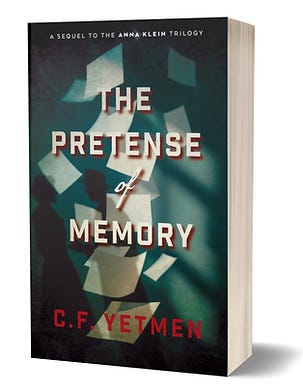
Pre-order Canan’s book! It’s a huge help to writers to hit pre-order thresholds before their release date. Also—it’s going to be a fantastic read.
Commit to your own practice.
What does it mean to you to create through chaos? I’m exploring this concept with my Austin-based in-person Tarot Circle on April 27. Please join us as we employ the TOWER card to reflect on the complications of living through the political and personal upsets of this moment. They are far-reaching, I know, but I truly believe we can get through them if we support our efforts to create in community.
To that end, consider reflecting back the support you receive here by sharing this page, commenting, or subscribing. Interacting with my posts is the only way I know that they are not just rolling out into the void. Plus it helps other people uncover the magic.
Do you want to learn more about working with your deck to unlock the mysteries of your soul-led life? Message me to book a reading.
Keep going to your decks or picking up your pens, paintbrushes ukuleles, or whatever the medium may be, so that we can continue to dive headfirst into the mystery of sounding out this human story. What matters to you? Let’s hear it, people!
Loved learning about Canan and her story. And wonderful reflections on it all, as always!
Beautiful piece, Melissa! <3